AERO Senior Design / September 2024 to June 2025
W.H.A.L.E.
Spacecraft.
A four-satellite Earth-observing constellation concept for whale migration, polar ice movement, and human and whale interaction monitoring.
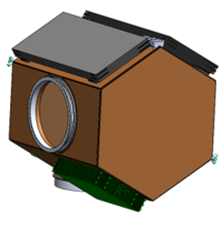
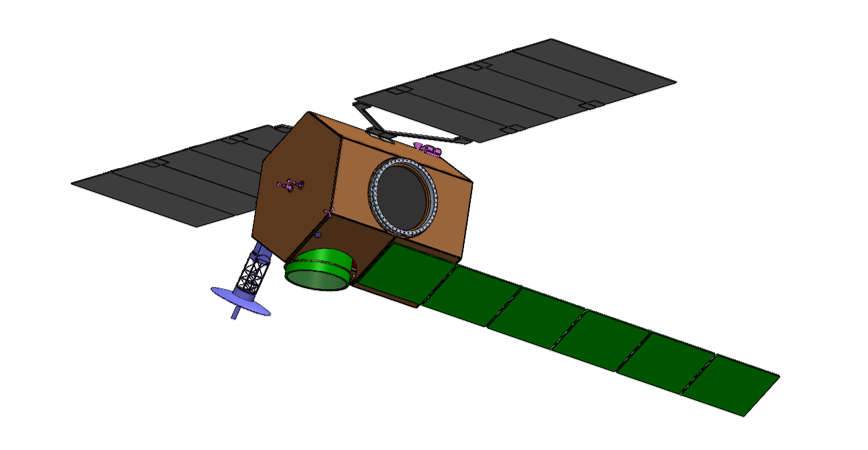
Mission configuration
One spacecraft,
two operating states.
01 / Project brief
One mission.
Four spacecraft.
Five years.
W.H.A.L.E., Worldwide Hydrographic Animal Locating Effort, was Cal Poly's year-long spacecraft senior design project. The mission concept paired Earth observation with marine conservation: track whale migration, monitor polar ice-cap movement, and assess shipping activity around whale habitats.
The program moved through PDR, CDR, final symposium, and industry-facing reviews. I led propulsion and co-led thermal within a direct three-person propulsion/thermal working group, coordinating the interfaces those systems had with the larger spacecraft team.
02 / My role
Propulsion ownership.
Thermal leadership.
System interfaces.
My work lived at the boundary between subsystem analysis and spacecraft-level decisions.
Propulsion
- Thruster selection
- Conceptual feed-system architecture
- Reliability and life-cycle analysis
- CAD placement and integration
Plume analysis
- ANSYS Fluent setup
- GN2 exhaust evaluation
- Impingement assessment
- Layout-driven design change
Thermal
- Preliminary spacecraft model
- Transient hot/cold cases
- Load integration and interpretation
- Radiator and insulation support
Integration
- GNC, structures, EPS interfaces
- Space-environment coordination
- PDR / CDR presentations
- Industry review communication
Scope note: I led propulsion and co-led thermal; I did not lead the full ~28-person spacecraft team. Several sizing and material decisions were collaborative, while the feed architecture, propulsion reliability model, plume analysis, and first preliminary spacecraft-level thermal model were my primary contributions.
03 / Propulsion architecture
Reliable thrust,
for the entire mission.
I developed the complete conceptual feed-system architecture at CDR level: propellant and pressurant storage, regulation, filtration, valves, sensing, lines, and both main and cold-gas thruster paths. It was an architecture study, not a manufactured or flight-qualified system.
04 / Major design trade
The harder question
was pressure.
A blowdown system was simpler. A regulated pressure-fed system was more predictable.
Over a five-year mission, decreasing tank pressure can change thruster performance, burn repeatability, and total impulse delivery. I evaluated that trade through both performance and reliability lenses, rather than optimizing only for minimum component count.
Lower complexity, but declining tank pressure can reduce performance consistency over time.
More components, but a more repeatable operating condition for the mission design.
05 / Thruster selection
22 N,
with margin.
The selected main thruster was the GR-22N using ASCENT / AF-M315E monopropellant, chosen in part for safer handling characteristics than hydrazine.
GNC provided a requirement of roughly 4 m/s delta-V per insertion or correction burn, with a maximum duration of about four minutes. For the ~731 kg spacecraft concept, a 22 N thruster operating for 240 seconds delivered about 5,280 N-s of total impulse, or ~7.2 m/s delta-V capability per burn, providing margin beyond the minimum requirement.
06 / Reliability
Redundancy was
a requirement.
~89%
Modeled propulsion-subsystem reliability over the five-year mission architecture.
I completed the propulsion reliability analysis using component lifetimes, use cycles, failure behavior, and series/parallel subsystem relationships. The final concept used two 22 N ASCENT thrusters: each engine's throughput constraint had to be considered, and the redundant arrangement reduced the single-point-failure risk of a single main thruster. This figure applies to the propulsion model, not the whole spacecraft.
07 / CFD plume impingement
Analysis that
moved hardware.
The result was not simply a contour plot. It changed the spacecraft layout.
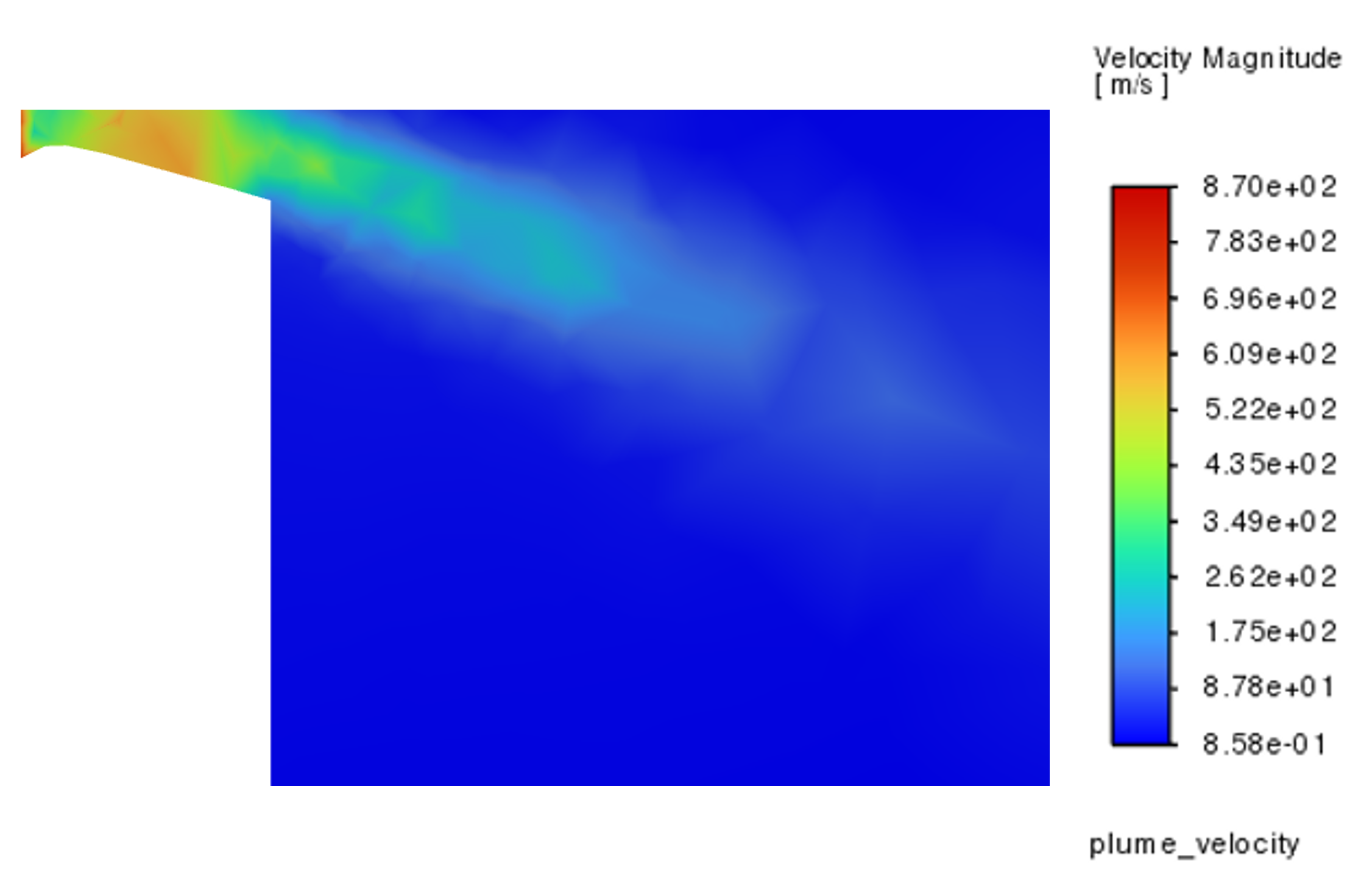
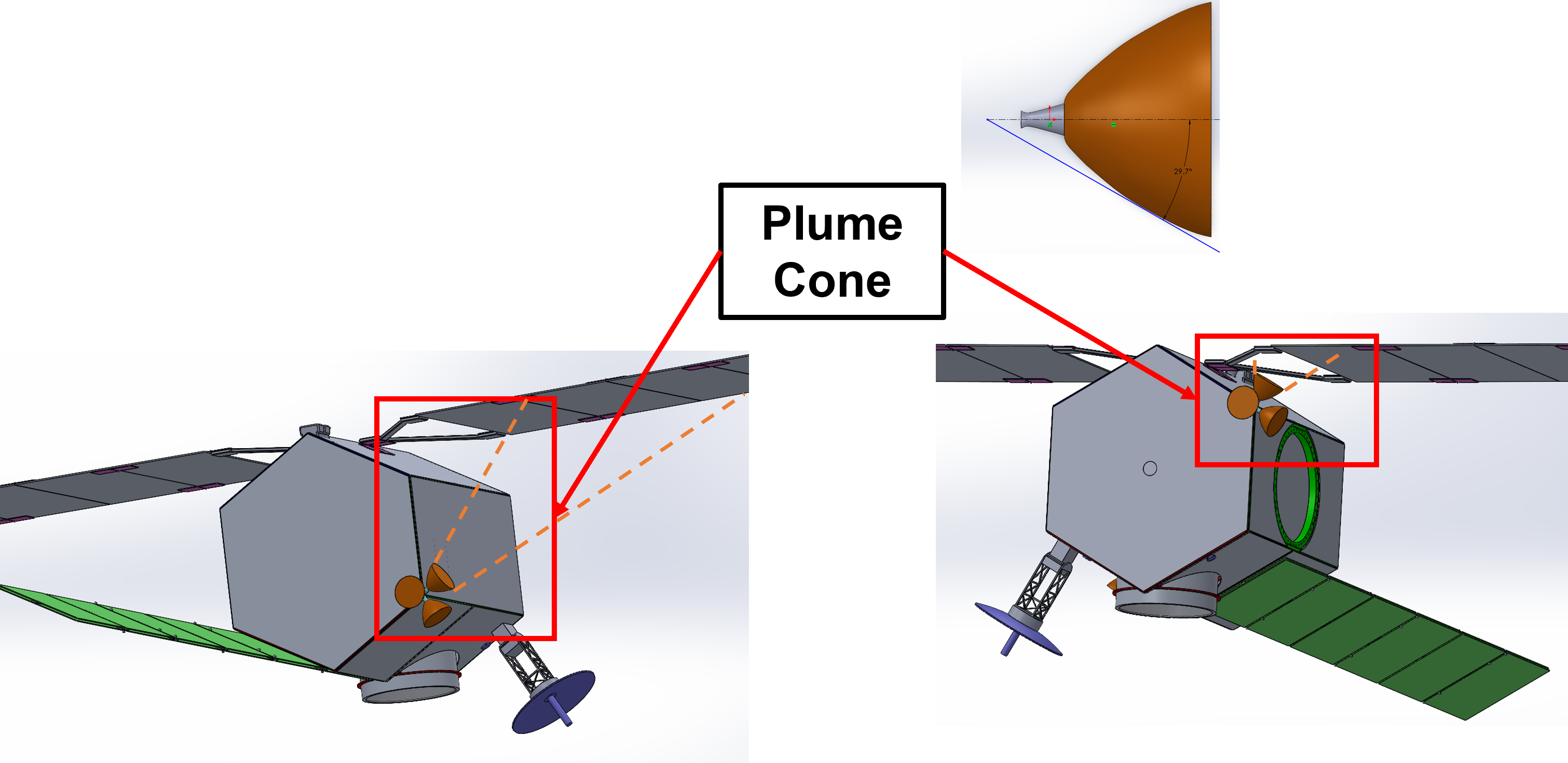
I ran the cold-gas plume analysis to determine how GN2 exhaust would expand around surrounding hardware. The result identified potential contamination and interference concerns, which caused the team to change thruster orientation and arrangement for greater separation from sensitive spacecraft components.
08 / Thermal architecture
A spacecraft is
a heat problem.
As thermal co-lead, I built and ran the first preliminary full-spacecraft ANSYS Transient Thermal model and integrated heat loads supplied across the subsystem team.
The model included representative conduction, internal heat generation, direct solar flux, Earth IR, albedo, material behavior, spacecraft exposure, and hot/cold orbital cases. The analysis supported radiator sizing, component placement, MLI and coating decisions, and material investigations.
09 / Thermal management concept
Move heat where
it can do work.
I proposed using heat pipes to transport waste heat away from the high-power SAR payload toward components at risk of becoming too cold during eclipse.
The idea was a conceptual strategy for distributing existing spacecraft heat more intelligently, rather than addressing each temperature problem only with heaters or radiators.
10 / Reviews and systems work
Subsystem work
only matters when it integrates.
Delta-V requirements informed propulsion sizing and burn capability.
Hardware placement and high-temperature regions drove structural and material interfaces.
Power use fed the spacecraft thermal-load model and heat-rejection assumptions.
Thermal-control materials and MLI concepts required joint evaluation.
I presented propulsion and thermal work through PDR, CDR, symposium, and industry-facing reviews, including presentations connected with Firefly Aerospace at Vandenberg and Maxar / Lanteris.
11 / Personal takeaway
Build the analysis.
Then let it change the design.
The work I am proudest of was not a single calculation. It was building an architecture, model, or analysis rigorously enough that it could affect the spacecraft: a regulated feed-system trade that considered life-cycle performance; a plume result that moved hardware; and a thermal model that shaped radiator, placement, and material discussions.
That is the kind of systems engineering I want to keep doing, technical work that survives the handoff from analysis to an integrated design.